Code Busters
- Description
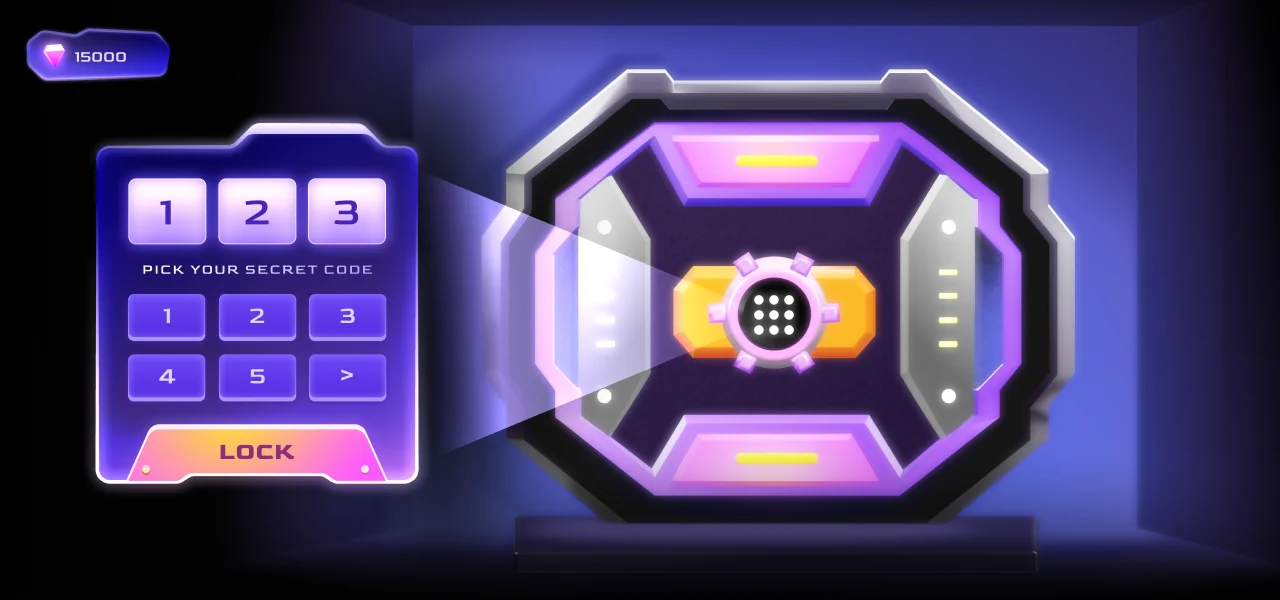
Code Busters is a competitive classroom Energizer for Wayground. Each student protects a personal vault code while racing to crack a classmate’s vault and steal their coins.
It turns the space between quiz rounds into a playful heist: answer accurately, break in faster, and protect your own score before someone else reaches it.
- Field
- Art Direction · 3D · Game UI
- Role
- Art Direction, Game UI, 3D World Design
- Client
- Wayground, formerly Quizizz
- Year
- 2026
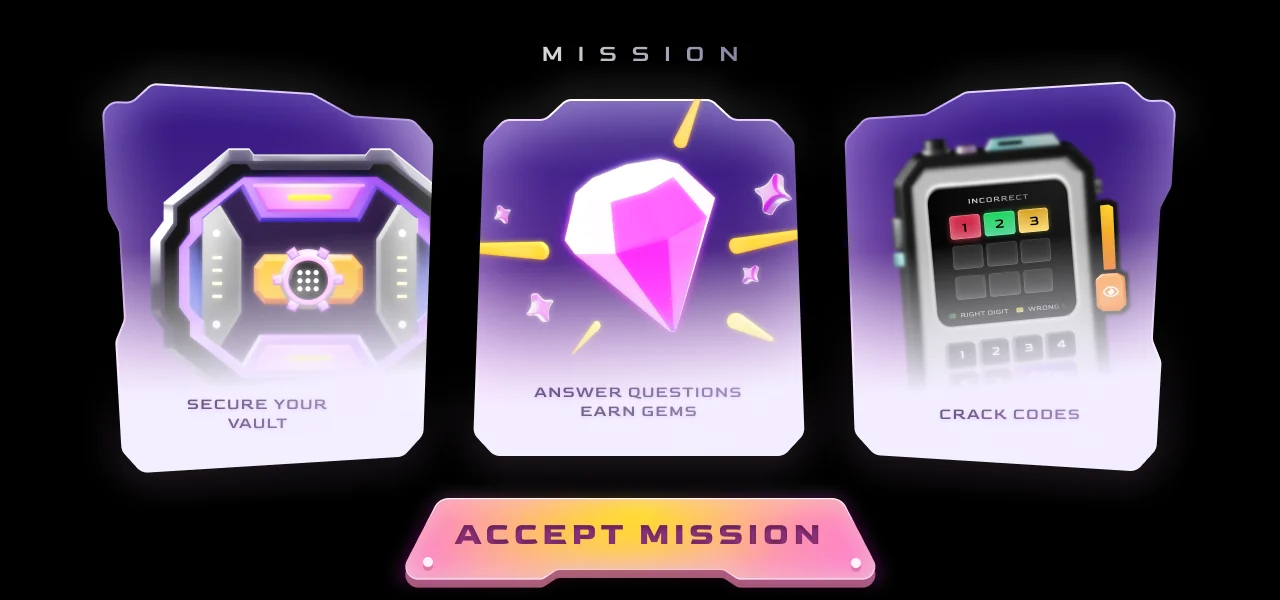
From a working prototype to a world
The developers had already proved the core mechanic in a basic prototype. My role was to turn it into a complete visual experience—building the art direction, story, 3D world, vault, and handheld hacking device so it felt like a game with its own identity.
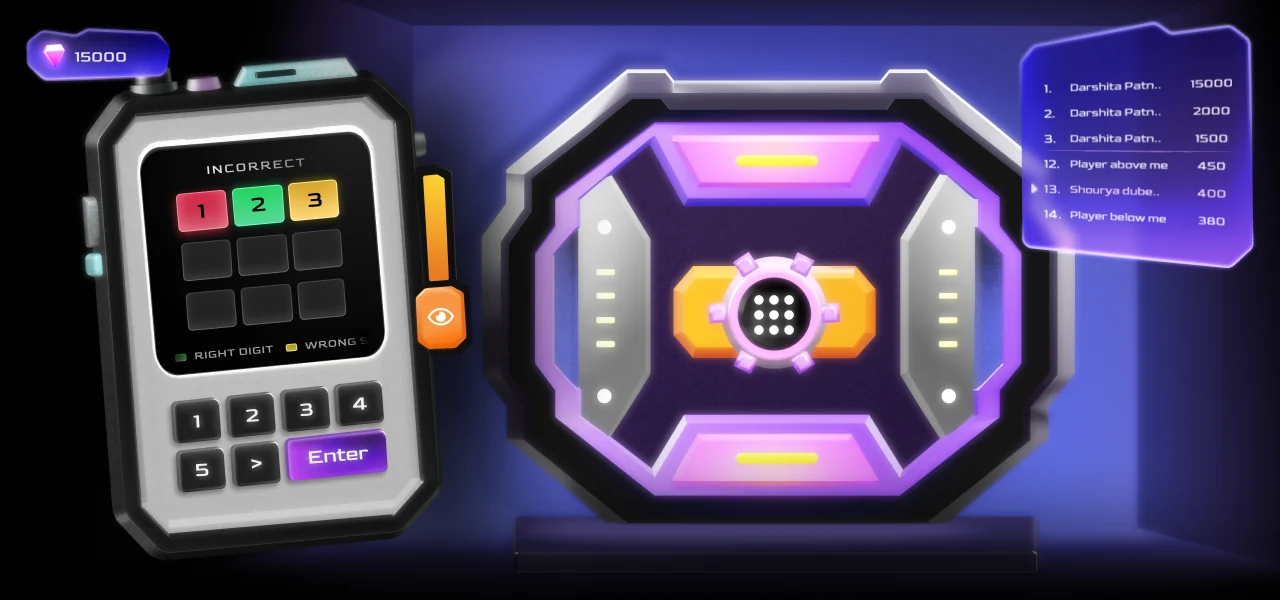
A heist built for kids
I reframed hacking as a playful heist. Chunky 3D forms, glowing controls, oversized devices, and saturated light make the world exciting and tactile without the severity of an adult crime story. The child is no longer just answering questions—they have a mission, a target, and a hacker persona.
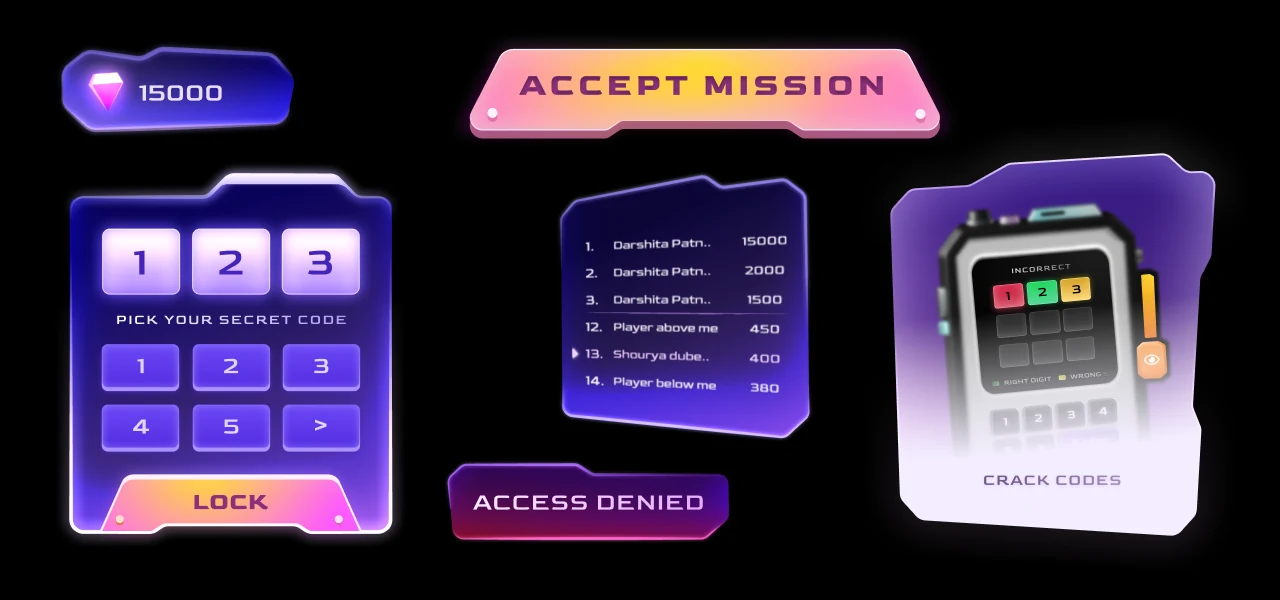
A UI layer built to float
The game world is dimensional and tactile, so I designed the interface as a lighter layer hovering above it. Luminous gradients, raised controls, clipped mechanical silhouettes, and subtly skewed panels make every interaction feel clickable while keeping the UI distinct from the 3D world beneath it.
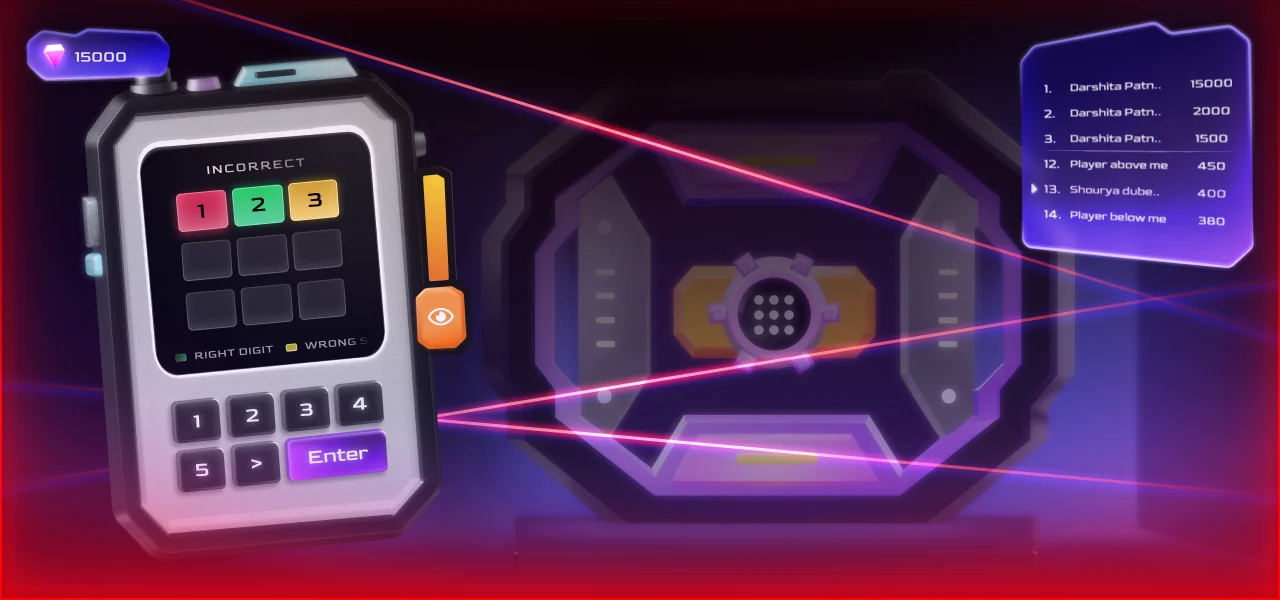
Every answer changes the world
A wrong answer triggers warning lights and lasers, separating the player from the vault. A correct answer moves the break-in forward. Feedback does not live only in the interface; the entire environment reacts, turning classroom accuracy into suspense.
Crack the vault. Take the coins.
Every player protects a personal code while trying to break into someone else’s vault. The promise of stealing coins gives each answer a clear stake: crack faster, defend your score, and climb the class ranking.
The payoff
When the code finally breaks, the gem emerging from the vault completes the arc: mission accepted, risk survived, reward earned.